Azure Cloud Consulting

Azure cloud consulting: a secure platform, modern apps, and a bill you can explain.

Azure tends to grow one subscription at a time: resources clicked together in the portal, owner rights on shared accounts, and a monthly bill nobody can break down. We design secure landing zones, move servers and applications onto managed Azure services, and put identity, monitoring, and cost guardrails in place so the platform stays governed after we leave.

A free 30-minute working session. We review your environment and send a prioritized action plan you keep, whether or not we work together.

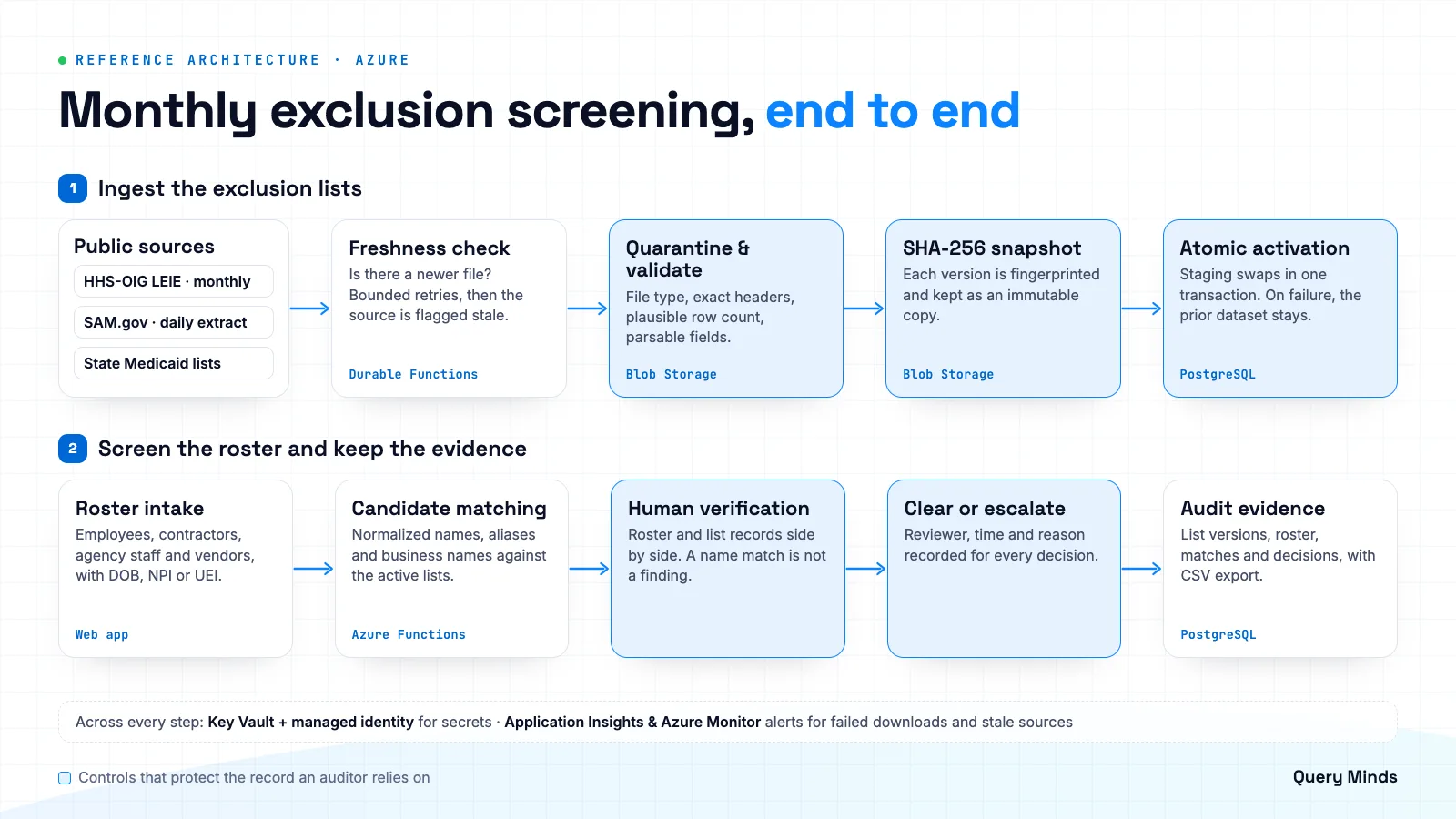
Azure reference architecture diagram for an automated exclusion screening pipeline
Azure reference architecture from our exclusion screening build.

When you need an Azure consultant

These are the sparks that usually bring us into the room.

  • Resources were created by hand in the portal, with no record of who built what or why.
  • Owner rights sit on shared or personal accounts instead of managed identities and roles.
  • The monthly bill keeps rising and nothing is tagged, budgeted, or rightsized.
  • On-premises servers and virtual machines are doing work a managed service should do.

Running Power Apps that cost more every time you add a user? See our Power Apps to Azure migration.

What our Azure cloud consulting delivers

Every engagement ships measurable impact, documentation, and enablement.

  • A landing zone with management groups, subscriptions, Azure Policy, networking, and Entra ID role-based access.
  • Workloads on App Service, Functions, Container Apps, and managed databases, deployed by pipeline from infrastructure as code.
  • Cost management with tagging, budgets and alerts, rightsizing, and a reservation review.
  • Monitoring and security: Application Insights, Azure Monitor alerts, Defender for Cloud, Key Vault, and managed identities.

Delivery method

How an Azure engagement runs

Every week includes demos, telemetry, and regulator-ready documentation.

  1. 01

    Assessment

    Inventory subscriptions, workloads, identities, and spend; rank risks and savings.

  2. 02

    Landing zone

    Policy, networking, identity, and logging set up before workloads move.

  3. 03

    Migrate & modernize

    Servers and apps moved onto managed services in waves, each deployed from code.

  4. 04

    Operate & optimize

    Monitoring, cost reviews, and runbooks your team uses after handoff.

Where it shines

Azure projects

Nonprofit & human services

Volunteers of America National: Affiliate Connect

Moved the national affiliate engagement app off Power Apps onto Azure as a TypeScript application on PostgreSQL, served as a web app and a Microsoft Teams-native app with Entra ID sign-in.

Per-user Power Apps licensing eliminated, and the organization owns the platform outright.

Azure App Service · PostgreSQL · Entra ID

Healthcare compliance

Automated exclusion screening

Built an exclusion screening application, front end and back end, and designed the Azure architecture behind it: durable orchestration for monthly list downloads, quarantined and validated files, immutable snapshots, and a record of every match a person cleared. The application is in final testing.

Designed so every run records which lists it used, which roster it screened, and who cleared each match.

Durable Functions · Blob Storage · PostgreSQL · Key Vault

Azure landing zones for small and regulated teams

A landing zone is the foundation every Azure workload sits on: how subscriptions are organized, who can do what, which policies block risky configurations, how networks connect, and where logs go. Enterprise reference designs assume a platform team of dozens. For a nonprofit or a regulated SMB we build the same controls at a size one or two people can run.

In practice that means Entra ID groups and roles instead of individual owner accounts, Azure Policy that stops public storage and untagged resources, managed identities and Key Vault so no secret lives in code, and diagnostic logs routed to one workspace that Microsoft Sentinel or your auditors can query.

Moving servers and applications to Azure

Lifting a virtual machine into Azure unchanged is sometimes the right first step, but it usually moves the cost and the maintenance without removing either. Where it is practical we move workloads onto managed services: web apps to App Service, scheduled jobs and integrations to Functions, databases to Azure SQL or PostgreSQL. Each is deployed from code by a pipeline, so the environment can be rebuilt and every change is recorded.

The exclusion screening build is an example of the pattern: Durable Functions orchestrate the monthly downloads with bounded retries, files land in quarantine until they pass validation, accepted versions are kept as immutable snapshots, and Application Insights alerts when a source goes stale.

Keeping the Azure bill under control

Most Azure overspend comes from the same few places: resources sized for a peak that never comes, environments left running overnight, storage nobody deleted, and services billed at list price when a reservation or savings plan would apply. We tag every resource by owner and purpose, set budgets with alerts, rightsize what is oversized, and review reservations against real usage.

Nonprofits should also check Microsoft's nonprofit offers, which have included Azure credits for eligible organizations. We confirm current eligibility during the assessment.

Platforms & accelerators

The Azure services we build with

Azure App ServiceAzure FunctionsAzure Container AppsAzure SQLAzure Database for PostgreSQLAzure API ManagementKey VaultEntra IDDefender for CloudAzure MonitorBicepGitHub Actions

FAQs

Azure cloud consulting FAQs

Can you migrate our on-premises servers to Azure?

Yes. We inventory what each server does, then move it in waves, onto managed services where practical and onto Azure virtual machines where that is the safer first step. Every wave has a rollback plan and is verified before the old server is retired.

How do you keep Azure costs under control?

Tagging by owner and purpose, budgets with alerts, rightsizing, schedules for non-production environments, and a reservation review against real usage. You get a cost dashboard and a monthly review routine your team can keep running.

Who owns the infrastructure after the project?

You do. Infrastructure is defined as code in your repository and deployed by pipelines in your tenant, with runbooks for the common operations. Nothing depends on our accounts.

Do nonprofits get Azure credits?

Microsoft's nonprofit program has included Azure credits for eligible organizations. Terms change, so we confirm current eligibility and apply it during the assessment.

How do you secure an Azure environment?

Entra ID roles instead of shared owner accounts, managed identities and Key Vault for secrets, Azure Policy guardrails, private networking where it matters, Defender for Cloud, and logs routed to one workspace that Microsoft Sentinel can monitor.

Ready for a governed Azure platform?

Tell us about your priorities and we will share a playbook within one business day.